

Claude Just Got Its Biggest Upgrade Since Opus 4.5

Something massive happened in the last 24 hours.
Bigger than any new model drop.
Bigger than any feature Anthropic has shipped this year.
When Opus 4.5 launched, the world took note. Developers and coders felt it first. It was smarter. It got more done. It understood things in a way that made everything before it feel like a rough draft.
That was a bookmark moment in the AI world.
Then months later, with the release of CoWork, another group of people got to experience what Opus 4.5 could really do. Not the coders. The content creators. The business owners. The people who weren’t head down in code but wanted to push AI forward in their work and their businesses.
What happened in the last 24 hours might be even bigger.
And it will impact people in ways that most won’t even realize.
If you use Claude for anything beyond a quick question, there’s a good chance what you’re getting back is a fraction of what Claude is actually capable of.
And you don’t even know it.
Now to be fair. Claude is without question my model of choice. I’ve tested every major model out there. I use Claude every single day. It’s my biggest subscription.
But even Claude has a problem.
And every AI model has the same one.
Claude starts every session like Einstein. Sharp. Powerful. Incredible.
But if you keep pushing the model and you don’t understand how to get the most out of it, which most people don’t, the performance degrades. It makes mistakes. It hallucinates. And you’re left with subpar output wondering why Claude “isn’t that good.”
It’s not Claude. It’s how the model works.
Think of it like a bucket of water.
Every question you ask, every response Claude gives, every piece of information it processes. That’s water going into the bucket.
When the bucket is a quarter full, Claude is dialed in. Focused. Giving you its best work.
But the fuller that bucket gets, the more things start to spill.
Stuff you said earlier gets lost. The quality drops. And if you keep going without knowing this, the Claude you’re talking to at the end of a long session is a completely different Claude than the one you started with.
Chroma Research tested 18 major AI models. The result was clear.
Performance drops by over 30% as more information gets added to the session. And it gets worse. As that bucket fills up, it drops off a cliff.
If you’re doing deep research, building something, running long sessions, and you’re not aware of this, your results are subpar. Compared to someone who understands this and manages it, you’re not even close to getting what Claude is capable of.
That bucket has a name.
It’s called the context window.
Here’s the good news.
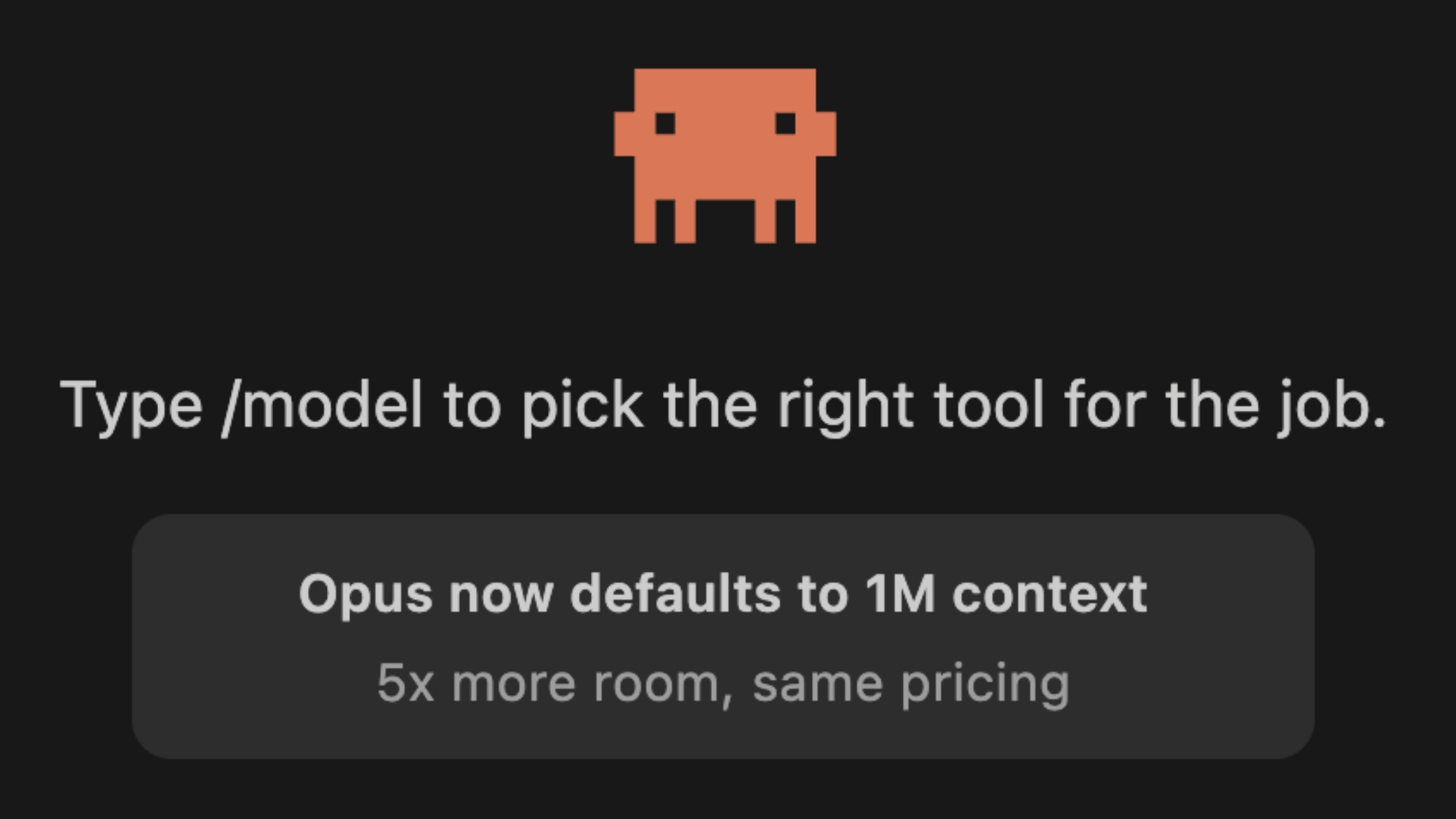
Anthropic just made the bucket 5x bigger. Same price. They just flipped it on.
That workload that used to fill your bucket to the brim? Now it barely fills a fifth of it.
Claude stays sharp because it’s not overwhelmed anymore.
Dario Amodei, the CEO of Anthropic, said “What would normally take six months to understand, the model can do in the context window.”
Before yesterday, that bucket was too small to deliver on that promise.
Now it’s real.
So what do you do with this?
Start fresh sessions for new topics. Don’t keep piling everything into the same one. If you’re deep into a long session and the output starts feeling off, that’s the bucket filling up. Start a new one.
The 5x bigger bucket means you can go longer before that happens. But it’s not infinite.
And here’s something most people completely overlook.
Documentation.
It sounds boring. It is. It also changes the game.
If you do your research, build up a document with your plan, your notes, what you’re trying to accomplish, and then start a fresh session and feed that document in, you save the bucket. You’re giving Claude exactly what it needs without all the back and forth that fills up the context window.
You’re working smarter. And your output will be dramatically better because of it.
Everyone’s chasing the next new model. This wasn’t a new model. It was the one you already have, finally given enough room to do its job.
Most people won’t realize this happened.
Now you do.
I’ll be writing more about this as we keep building. If you dig this kind of breakdown, subscribe. I’ll keep sharing what I’m learning.
Brian G.