Is Blogging Still Relevant in 2026? Hard Facts You Can Ignore
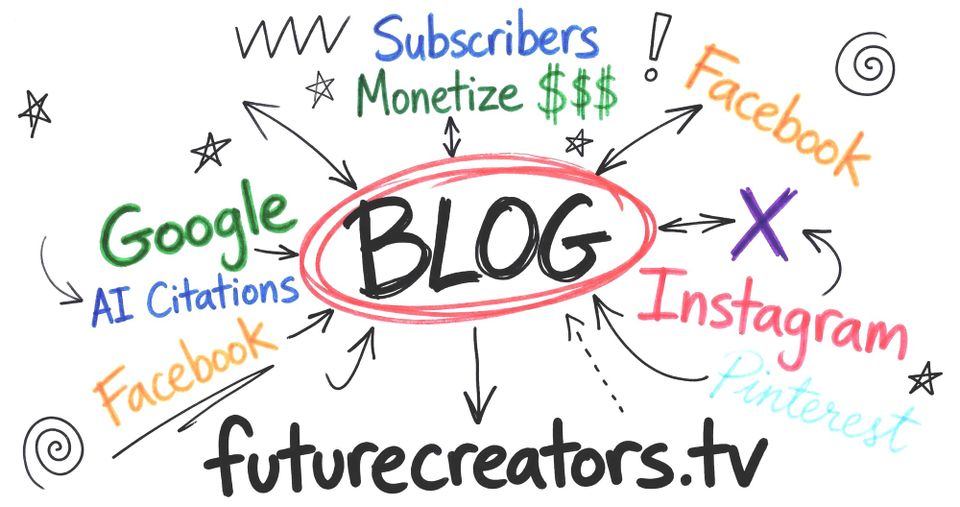
If you're wondering whether blogging is still worth it in 2026. If you've heard it's dead. If you're not sure whether to invest your time or move on to the next thing.
Fair questions. All of them.
Here are the hard facts.
Over 600 million blogs exist worldwide and 77% of internet users read them regularly. At the same time, 60% of Google searches now end without a click, AI Overviews appear in 55% of all searches, and AI-driven visitors convert at 4.4x the rate of standard organic traffic. The blogs winning in 2026 are built on real experience, focused topics, and content that AI models cite as a source.
So, is blogging still relevant in 2026?
For most people, the answer is probably no.
- Most people won't do the work.
- Most people want quick results.
- Most people will quit before anything compounds.
But if you're willing to play the long game. If you're ready to build something that grows while you sleep. If you want to own your platform instead of renting someone else's.
Then yes.
The benefits of having your own website, call it a blog, call it a hub, call it whatever you want, are more powerful in 2026 than they've ever been.
I'm 60 years old and I'm launching this very website in the spring of 2026. After more than 25 years online as an author, speaker, and YouTube creator, with 160K+ subscribers, 14 million views, and two published books behind me, I believe in this so much that I'm doing it all over again.
Here's why.
The Writing on the Wall
Yes, Google search traffic is declining. Anyone telling you otherwise isn't being realistic.
But here's what most people miss when they hear that. We're still talking about billions of searches happening every single day. That's not going to zero. Some sites are going to keep pulling search traffic for years to come.
And the ones that don't? A lot of that traffic is being replaced by something new. AI citations. When someone asks ChatGPT, Claude, or Perplexity a question, those models cite sources. And where do you think those sources come from?
Websites. Blogs. The stuff written by people like you and me.
Why couldn't your blog be the one that gets cited tomorrow for something you're passionate about? Your business, your craft, your cause. The ticket to entry hasn't changed. It's still a real website with real content from a real person. I wrote a full breakdown of how to increase website traffic through experience and trust and this is the foundation of it.
How Long Before You See Results
I'm gonna be honest with you. I hate this question.
I don't have a crystal ball.
I don't know how hard you're going to work. I don't know if you'll choose the right platform. I don't know if you'll use AI to generate slop or to create something real.
Nobody can answer this question for you.
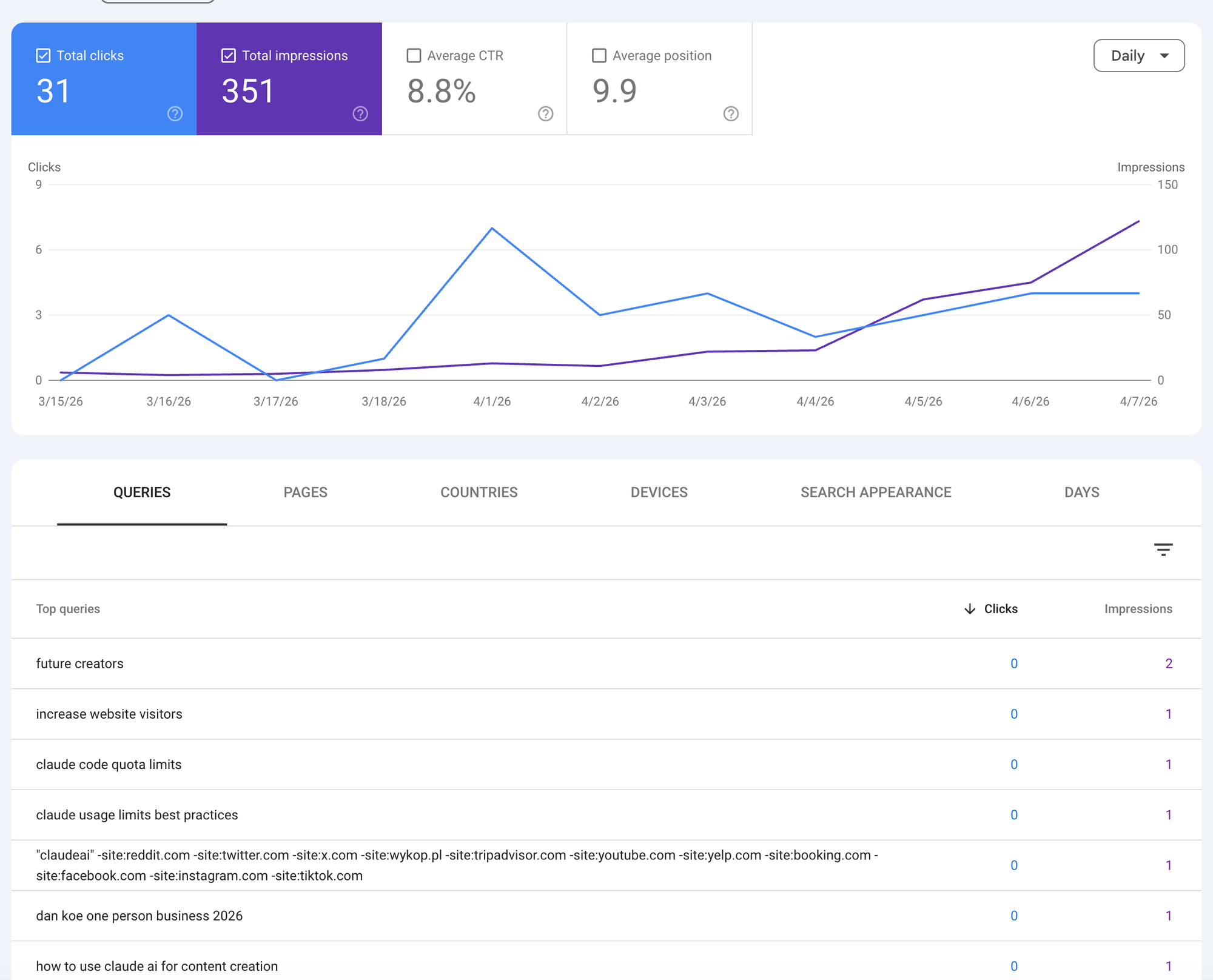
But here's what's happening for me right now. Brand new domain. Brand new site. Indexed in days. Getting impressions and clicks from Google, again in days. So yeah, it's working. It's early. But it's working.
For those who work smart and stay consistent, I think small results in 3 to 6 months is very possible. Over time, something called clustering kicks in, where you write multiple posts about the same topic, link them together, and Google starts seeing your site as the authority on that subject. That's when things compound.
It all comes back to the decisions you make upfront. The right platform. Authentic content. And that doesn't mean writing everything yourself. I voice dictate my ideas, come up with my own angles, and have AI help me put it together. But the ideas are mine. The experience, mine.
A social media post dies in 48 hours. A blog post can drive traffic for years.
What It Actually Costs to Start a Blog in 2026
Money. Free to $29 a month. Substack, WordPress.com, and Blogger cost nothing. Ghost starts at $19 a month. I pay $29 for the pro account. A custom domain runs about $10 to $15 a year. You can start a blog for literally zero dollars or for less than a dollar a day.
Time. Realistically 3 to 5 hours a week to write, publish, and maintain. More if you're learning as you go. Less once you get a system down.
The emotional cost. This is the one nobody talks about. You'll publish and hear crickets for weeks. Maybe months. It feels like shouting into a void. That's normal. And it's where most people quit.
Here's the part that matters more than any of that. The decisions you make right now will have a dramatic impact on your ability to do the two things that actually matter. Drive traffic. And convert.
So before you sign up for anything, figure out which bucket you're in.
If you're just getting started and feeling overwhelmed. Don't add a blog to your plate. Focus on creating content, building an audience, learning the craft. Once you're not drowning, then think about a website.
If you're a content creator on YouTube or TikTok wondering if you need a website. Maybe. But not yet. Get the audience first. The blog will be there when it makes sense.
If you know you want to blog and you care about Google traffic. Don't go free. The platform you choose matters more than you think, and I'll break down exactly why in a minute.
What I Know Beyond a Shadow of a Doubt
Google wants people to share their experience.
That doesn't mean you need to be an expert. It means you need to share your experience.
Nothing more.
Nothing less.
Nobody wants to read push-button, auto-generated articles that any monkey could spit out. The thing Google rewards, and the thing AI models cite, is real human experience.
Here's what happens over time. You focus on one topic and keep showing up. Experience turns into expertise. Expertise turns into trust and authority. That's the foundation of how you get found in 2026. And Google literally just cranked up the experience signal in March 2026. If you want to go deeper on that, [you can read more about it here].
Picture It Like an Island
Imagine looking down on a map from above. There's a little island, water all around it. That's the moat.
The island is yours.
You control everything on it. Who comes, what they see, how they find their way back. And unlike when the word "blogging" first entered the internet marketing vocabulary, that little island now opens up a whole set of opportunities that simply didn't exist back then.
Today you can:
- Your own moat: It's your island. You own it, you control it, and nobody can take it away from you.
- Easy: No coding, no hosting headaches, no tech degree required. If you can write a Facebook post, you can publish to your own site.
- Monetization: Paid subscriptions, products, sponsorships, ads, affiliate links. Most platforms have this built in from day one. You can start charging quickly and easily.
- Traffic from everywhere: Google search, AI citations, social referrals, platform networks, direct visits. A website pulls from multiple sources at once instead of relying on one feed.
- Email list: The one audience that's truly yours. No algorithm, no platform, no terms of service can take it away from you.
- Credibility: Sponsors, brands, and serious readers take you more seriously when you have a home of your own on the web.
- Creative freedom: Your design, your voice, your format. No character limits, no aspect ratios, no platform telling you how to show up.
The AI Angle Most Creators Are Missing
Here's something a lot of creators are missing in 2026. The early adopters who catch on now are going to have a massive head start in a few years.
If you're already creating long form content, you could be publishing to your own website quickly and easily, especially once you get up and running. Your content then lives in two different forms in two different places, and that opens up a whole stack of incredible benefits.
Stay with me here.
We're not talking about having ChatGPT or Claude write your script or your article for you. We're talking about using AI to write better, authentic content. Capturing the ideas you've already laid out, doing the scripting, and staying true to your voice.
Here's how it works. Take a video you've already made, grab the transcript, turn it into an article, and have it published to the web almost immediately. Your audience now has a place to land where they can read the article, watch the video, subscribe to your email list for free, and because most platforms make it easy, monetize from the same page.
And it goes deeper. As you get more comfortable with AI, it becomes an ideation tool. A thinking partner. A way to capture your ideas, flesh them out, do the heavy research, and get to the finished piece faster than you ever could on your own. I built an entire AI second brain using Karpathy's LLM knowledge base approach and it's changed everything about how I create content.
That's what we're talking about. Not AI replacing you. AI removing the friction between the ideas in your head and the work on your site.
When Do I Actually Start?
When you do decide to launch, I honestly think it makes sense to spend a few bucks a month rather than going completely free.
Here's my own story. I started on Substack and ran into limitations around the traffic sources I cared about most. Google longtail keyword phrases, AI citations, and the technical SEO basics. I wrote a full breakdown of whether Substack is worth it in 2026 if you want the details.
Substack is great if you're an entrepreneur or if you've already got an audience to pull in. But even then, they take 10% of your revenue. That adds up fast.
After a few weeks I abandoned my Substack, signed up with Ghost, and switched everything over. Ghost starts at $19 a month. I pay $29 for the pro account. You keep 100% of your earnings.
But even more important is what Ghost gives you technically. Your site loads faster. You get a sitemap that actually works. The infrastructure is modern and built for search. All of that matters to Google in 2026.
The results were immediate.
I got indexed. Pages are showing up in Google. I'm getting search referrals daily. It's small, but it's growing. And we're talking about a site that's literally days old.
What to Publish First
Once you have the site, the blank page is the next hurdle. And what you publish in those first months will quietly determine how much traffic you pull from Google and AI citations years from now.
It compounds. So be intentional.
Here's the single biggest thing to understand. Build a cluster of content around one specific topic. I lay out exactly how to do this in my best content creation strategy for 2026. Yes, I'm talking about a niche. Same as it ever was. Some things don't change.
But what has changed is how Google ranks pages. They don't rank individual posts the way they used to. They look at the whole site and ask, "what does this site actually cover?" When you go deep on one subject, you increase the chances that any single post or page on your site can rank.
And ranking in 2026 is about more than just keywords. It's about your experience. The structure of your site. How your content connects together. The clustering I just mentioned. All of it.
A few things worth knowing as you start publishing:
- Information gain. Google is actively rewarding this right now. Information gain means your article brings something new to the conversation. A fresh angle, a personal experience, a piece of data, an insight nobody else is offering. If your post is just a rehash of the top 10 results, it's not going to move. If it adds something only you could add, it has a real shot.
- Clustering. Don't write one post about ten different topics. Write ten posts about one topic. Then link them together. Over time, this signals to Google and AI models that your site is the place to go for that subject.
- Links still matter, but less than they used to. You don't need to chase backlinks. Over time, if you publish good stuff, you'll naturally pick up a few solid links from good sites and that's enough. The game has shifted away from link-building and toward content quality and topical authority.
So what should you actually publish first? Start here:
- Your origin story. Who you are, what you do, what you believe. This becomes the page people read when they want to know if you're legit.
- Repurposed content from your existing platforms. If you have YouTube videos, turn the transcripts into articles. You already did the hard work. Make it work twice.
- The questions your audience keeps asking. Every question is a potential article inside your cluster.
- Experience-driven posts. Things you've actually done, mistakes you've actually made, results you've actually gotten. This is the rocket fuel for E-E-A-T, information gain, and AI citations all at once.
Spend the vast majority of your time just creating great content, making it unique, and keeping it tightly focused on your one thing. That's the whole game.
So — Is Blogging Still Relevant in 2026?
Back to the question we started with.
The 2012 version of blogging is dead. Push-button content farms are dead. Chasing Google rankings with thin articles is dead.
But I personally believe there's a ton of opportunity in starting a blog in 2026. Especially for those of us thinking long term.
Three hours a week once you're up and running. One or two posts a week. That's nothing. And yet it's a place for people to land. A place to monetize. A place to grow a true subscriber base, one that you can reach out to at any time. That matters. That's what we're building at Future Creators.
The world has more noise, more rented platforms, and more AI slop than at any point in history. And the antidote to all of it is a real human, sharing real experience, in a place they actually own.
So for me personally? Yes. A blog in 2026 is most certainly worth it.
And only you know if it's worth it for you.

Content strategist, author of Trust Funnel and Tube Ritual, and YouTube Silver Play Button recipient with over 25 years of experience helping creators build audiences online. He writes at FutureCreators.tv.
Member discussion