How to Find Your Niche as a Content Creator in 2026
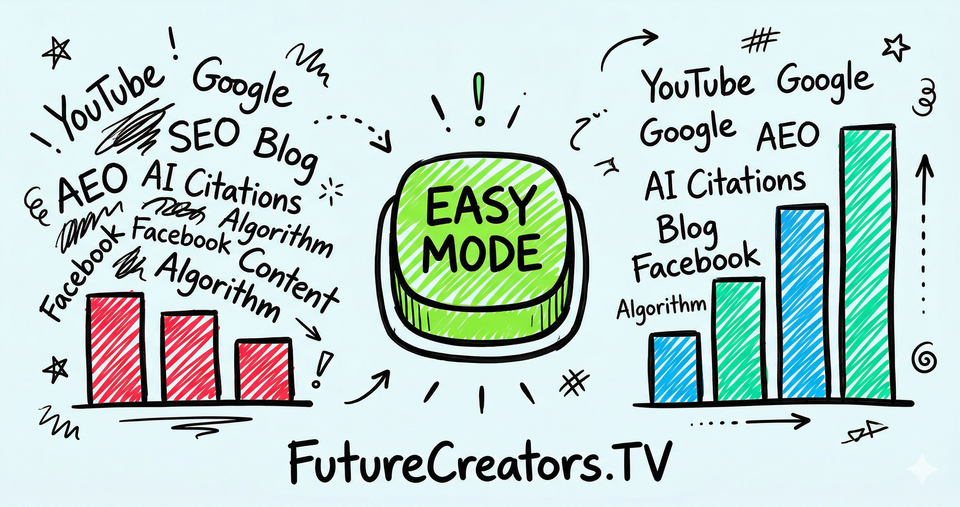
n 2026, the algorithms that drive traffic and conversions are either boosting or burying you.
No middle ground.
The single biggest thing that decides which side you land on is your niche.
Get it right and everything gets easier. Publishing. Monetization. Traffic. Trust. Get it wrong and you're invisible no matter how hard you work.
I'm Brian G. Johnson, for 26 years creating content and I've generated life changing - job ending income. Two monetized YouTube channels, one Silver Play Button. Two published books, one translated into Japanese. Blogging, affiliate marketing, list building, Kindle. In 2026, you should be doing several of these things. YouTube. A blog. A list. Maybe a book. They feed each other. But none of it works if the niche underneath is wrong.
So let's fix that.
First, you need to understand why the advice you've already heard is sadly working against you.
The Best Niche for Content Creators in 2026
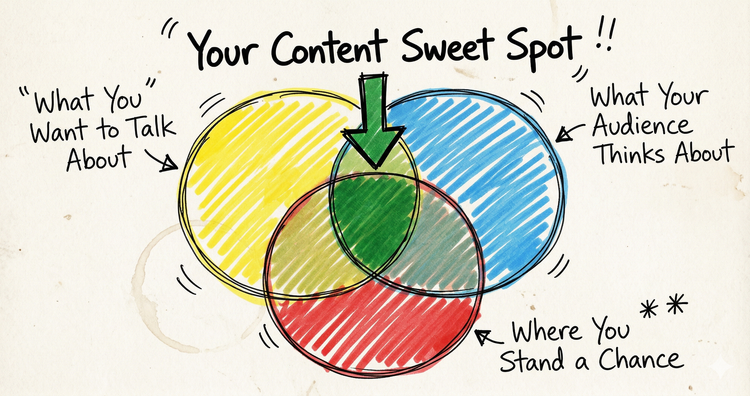
You've probably seen the niche advice before. Draw a Venn diagram of passion, skills, and market. Pick the overlap.
Done. Boring, been there, done that.
That advice was written years ago, for a different internet. An internet before ChatGPT. Before Claude. Before Google's AI Overviews. Before YouTube started burying ai channels. If you followed that old playbook today, you'd miss the single biggest shift in how content gets discovered.
Here's the good news.
There has never been a better time to start. The algorithms are rewarding specific things right now. Learn what they are. Pull those levers and you'll get a real advantage, even if you're starting from zero.
The bad news?
Skip these levers and you'll be invisible. Doesn't matter how hard you work.
Here's what the algorithms actually want.
The Algorithm Levers You Can Pull Right Now
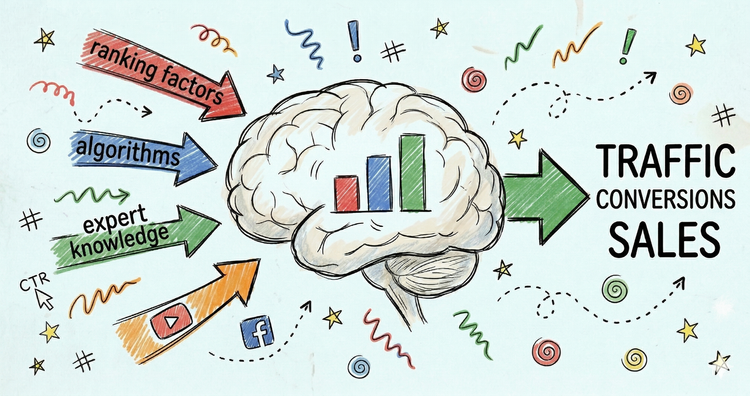
Over the last three months I've spent hundreds of hours researching how the algorithms actually work in 2026. Google, YouTube, Instagram, Facebook. I condensed everything down to the things that matter most.
Get these right and you can succeed. Miss them and your chances are similar to that of a snowballs chance in hell. Sad, but true.
Experience Is the Unlock (And It's Not What You Think)
Every algorithm is trying to filter out the noise.
The ai noise and slop.
And the primary way they're doing it right now is through experience. Your experience. The stuff you've actually lived, done, and learned.
Google formalized this into a framework called EEAT. Experience, Expertise, Authority, Trust. They put Experience first for a reason. You don't need to be an expert when you start. You need to have done something. Anything. The more experience you gain, the more people start viewing you as an expert along the way. That's how it works. I wrote a full breakdown of how experience and trust drive traffic in 2026 if you want to go deeper on this.
But experience alone isn't enough. Not even close.
The algorithms are in full backlash mode against generic AI content right now. The sea of ai channels, blog post and more that could-have-been-written-by-anyone is the target and Google never misses.
That content is getting actively buried, de-index and demonetized in 2026. The thing that separates you from the slop is your point of view.
Your thoughts.
Your ideas.
Your angles.
The take only you have because nobody else has lived your exact life.
Ten people can review the same iPhone. The one who wins is the one with a point of view.
And here's what's cool.
No matter what niche you pick, today's AI tools can actually help you share that point of view. Keep your authentic voice, do better work, and grow faster to-use-ai-write-better-authentic-content spoke. It's not about AI replacing you. It's about AI removing the friction between the ideas in your head and the content on your site.
That connects directly to something Google is actively rewarding right now.
Information Gain
What if Google could tell whether your article actually adds something new to the conversation?
It can. And it's called information gain.
Everybody releases the same article when the new iPhone drops.
- Same specs.
- Same camera tests.
- Same verdict.
Google sees a thousand copies of the same thing.
Then you come in. You've been using the phone for two weeks in a way nobody else is writing about. Maybe you're dyslexic and you test the accessibility features. Maybe you shoot video for your business and you notice something weird about the color science. That's information gain. That's the article Google wants to boost because it actually adds something to the index. Something based on experience, somehitng with a unique point of view. Your point of view.
Information gain and personal experience are tied at the hip. You can't really have one without the other. That's the good news. But there's a catch if you're building on YouTube.
YouTube's AI Stance
If you're on YouTube, you already know. They're cracking down. Hard.
This doesn't mean you can't use AI. It means faceless AI channels with a robot voice reading a generic script are done.
- Buried.
- Demonetized.
You don't necessarily have to show your face. Simply share your experience in someway shape or form. Your voice over. Your ideas. Your images photos, your B roll or more. This is the way. Use AI as a tool behind the scenes.
That's the play.
Everything I just covered applies to every niche. But there's one more lever that determines whether your niche choice puts you on easy mode or hard mode.
The YMYL Warning
YMYL stands for Your Money or Your Life. Google treats content about health, finance, medical topics, and legal topics with extra suspicion. They lean heavy into authority for those niches.
Translation.
If you want to talk about health and wellness, or money, or supplements, or anything that could impact someone's life, it's going to be harder. Not impossible. Harder. Google wants to see real credentials or years of demonstrated experience before they push your content to the top.
This is worth knowing before you pick. Some niches are easy mode. Some are hard mode.
Choose with your eyes open.
So you know the levers. You know which niches are harder. But before you pick anything, there are four traps waiting for you.
The 4 Traps Most Creators Fall Into
Know these before we get to the exercise. Most creators walk right into at least one.
- Too broad. A channel about "cooking" that covers baking, grilling, smoothies, and meal prep. Google can't tell what you're about. Neither can your audience.
- Too trendy. Chasing whatever popped off last week. No compound growth. You're always starting over.
- Passion with no demand. You love it. Nobody's searching for it. You'll burn out before the audience shows up.
- Profit with no passion. The niche pays well on paper. You hate every minute. You quit in six months.
The goal is to avoid all four. And there's one concept that eliminates traps one and two instantly.
Deep Niche Beats Wide Niche Every Time
Here's a phrase I want you to remember.
Deep niche.
In 2026, Google and YouTube reward creators who go deep, not wide. Instead of a channel about cooking, pick Italian cooking. Or better, Italian cooking for busy parents. Or even better, one-pan Italian weeknight dinners.
The deeper you go, the easier it gets to trigger the algorithms. The audience knows exactly what you're about. Google knows exactly when to serve you up. YouTube knows exactly who to recommend you to.
Deep niche plus your point of view equals information gain.
That's the formula. And once you've picked your niche, you build a cluster around it. I lay out the best content creation strategy for 2026 in a separate article that picks up right where this one leaves off.
But how do you actually find YOUR deep niche? Not someone else's. Yours.
I've got a pen-and-paper exercise for that. And it matters that you do it offline first.
How to Find Your Niche as a Content Creator: The Notepad Method
Here's the exercise. And I'm telling you, don't skip the physical part.
Grab a notepad. A real one. A pen. Make yourself tea or coffee. Sit somewhere comfortable. Couch. Porch. Kitchen table. Somewhere you actually relax.
No laptop yet. No phone. Just paper.
Draw a line down the middle. Then a line across. Four quadrants.
Quadrant 1: Life Experience. What have you lived through? Divorced and rebuilt? Raised kids? Got sober? Moved across the country? Survived a health scare? These count. They count a lot.
Quadrant 2: Work Experience. What have you done for money? Jobs, side hustles, failed businesses, successful ones. What did you learn that took you years to figure out? That's gold.
Quadrant 3: Hobbies and Obsessions. What do you keep coming back to? What do you read about for fun? What would you talk about at a party even when nobody asked? These are signal.
Quadrant 4: How You Want to Make Money. This one matters. Affiliate marketing? YouTube AdSense? Your own products? Coaching? Kindle books? Different niches monetize in very different ways. Gaming is hard to monetize because the intent is fun. Weight loss, making money online, and investing all monetize because the intent is results.
Fill it in. Don't rush. This is the thinking part.
Put the pad somewhere you'll see it. Come back to it over a few days. Add things. Cross things out. You're looking for patterns. Something that shows up in more than one quadrant. Life experience that overlaps with how you want to make money. A hobby that overlaps with work experience.
That overlap is where your niche lives.
Once you've got a short list on paper, it's time to pressure-test it. And this is where most people skip a step that could save them months of wasted effort.
The AI Pressure-Test & Niche Quiz
You've got your candidates on paper. But how do you know if any of them will actually work before you invest months into it?
Open Claude or ChatGPT. I use Claude for almost all of my content works. It's my go-to thinking partner. Paste in a prompt like this.
I'm trying to pick a niche as a content creator in 2026. I want to
publish on YouTube and a blog, and build an email list. Here are the
three candidates I'm considering based on my own life:

1. [your first candidate]
2. [your second candidate]
3. [your third candidate]

For each one, I want you to pressure-test it. Tell me:
- Is there ongoing demand, or is this a fad?
- How wide or deep is it? Can I go deep without running out of topics?
- What's the monetization path? Affiliate, AdSense, products, coaching?
- Is this a YMYL niche that will be harder because of Google's
  authority requirements?
- What angle could I bring based on my personal experience that would
  give me information gain?
- What are the top 3 reasons someone would fail in this niche?

Be direct. Don't flatter me. I want the truth.
That's the quiz. Not a gimmick. It's you, your notepad, and a tool that can pressure-test your thinking in five minutes.
Run it. Read the answers. Then sit with them.
The AI won't pick for you. That's not the point. The point is to surface things you hadn't thought about. Blind spots. Monetization paths you didn't know existed. Traps you were about to walk into.
But don't stop there. AI content creation is smart, not omniscient. You need to check its work.
Validating What the AI Gives You
Don't just take the AI's word for it. Validate. Three quick checks.
Google Trends. Type your candidate in. Is the line going up, flat, or falling off a cliff? Up is good. Flat can work. Falling is a warning.
YouTube search. Search your niche. Are there creators doing well? Are their videos getting views? If nobody is making money in your niche, there's usually a reason.
Reddit. Find the subreddit. Is it active? Are people asking questions? Those questions are your content ideas for the next two years.
If all three check out, you have a real niche.
But there's one more thing that separates the creators who make it from the ones who flame out. And it has nothing to do with algorithms.
Inner Voice vs. Outer Box
One more thing before you go. And this might be the most important part.
Your Outer Box is what the world sees. Your job title. Your follower count. Your credentials. The resume version of you.
Your Inner Voice is what actually drives you. The thing you're excited about. The opinion you haven't shared yet because it feels too personal, too vulnerable, not expert enough.
Here's the truth. Start from your Inner Voice.
Share what drives you, what you've actually experienced, what you genuinely believe. Yes, it can feel scary. Yes, it can feel vulnerable. But it's the thing people gravitate toward. It's the thing the algorithms reward. And it's the thing no one else can copy.
You don't need to be an expert to start. You need to be real. Show up. Share the journey. Say the thing only you would say. Do that for a year and the expertise shows up whether you wanted it to or not. Authority follows. Trust follows. EEAT, all four letters, follows.
That's what we're building at Future Creators.tv
That's the whole game.
Next Steps
Here's what to do this week.
- Do the notepad exercise. Four quadrants. No laptop.
- Pick three candidates that show up in more than one quadrant.
- Run the AI pressure-test prompt above.
- Validate with Google Trends, YouTube, and Reddit.
- Pick one. Go deep. Start publishing. If you're wondering where to publish, I broke down whether blogging is still relevant in 2026 and whether Substack is worth it. Both will help you pick the right platform for your niche.
FAQ
How do I find a niche for content creation if I don't have any expertise?
You don't need expertise. You need experience and a point of view. Experience is the first letter in EEAT for a reason. Start with what you've actually lived through, share your honest take, and expertise builds over time.
What's the best niche for content creators in 2026?
There isn't one best niche for everyone. There's a best niche for you, based on your life experience, work history, hobbies, and how you want to make money. That's why the notepad exercise matters more than any trending list.
Can I use AI to create content in my niche?
Yes, but carefully. Google and YouTube are burying faceless AI content in 2026. Use AI as a tool behind the scenes. I wrote a full breakdown of [my AI content creation system →LINK: ai-content-creation spoke] if you want to see how. Show your face. Share your point of view. The slop pile is real. Don't end up in it.
Should I pick a broad niche or a narrow one?
Narrow. Every time. Deep niche beats wide niche in 2026. Google and YouTube reward focus. Start narrow, build trust, then expand once you have authority.

Content strategist, author of Trust Funnel and Tube Ritual, and YouTube Silver Play Button recipient with over 25 years of experience helping creators build audiences online. He writes at FutureCreators.tv.
Member discussion